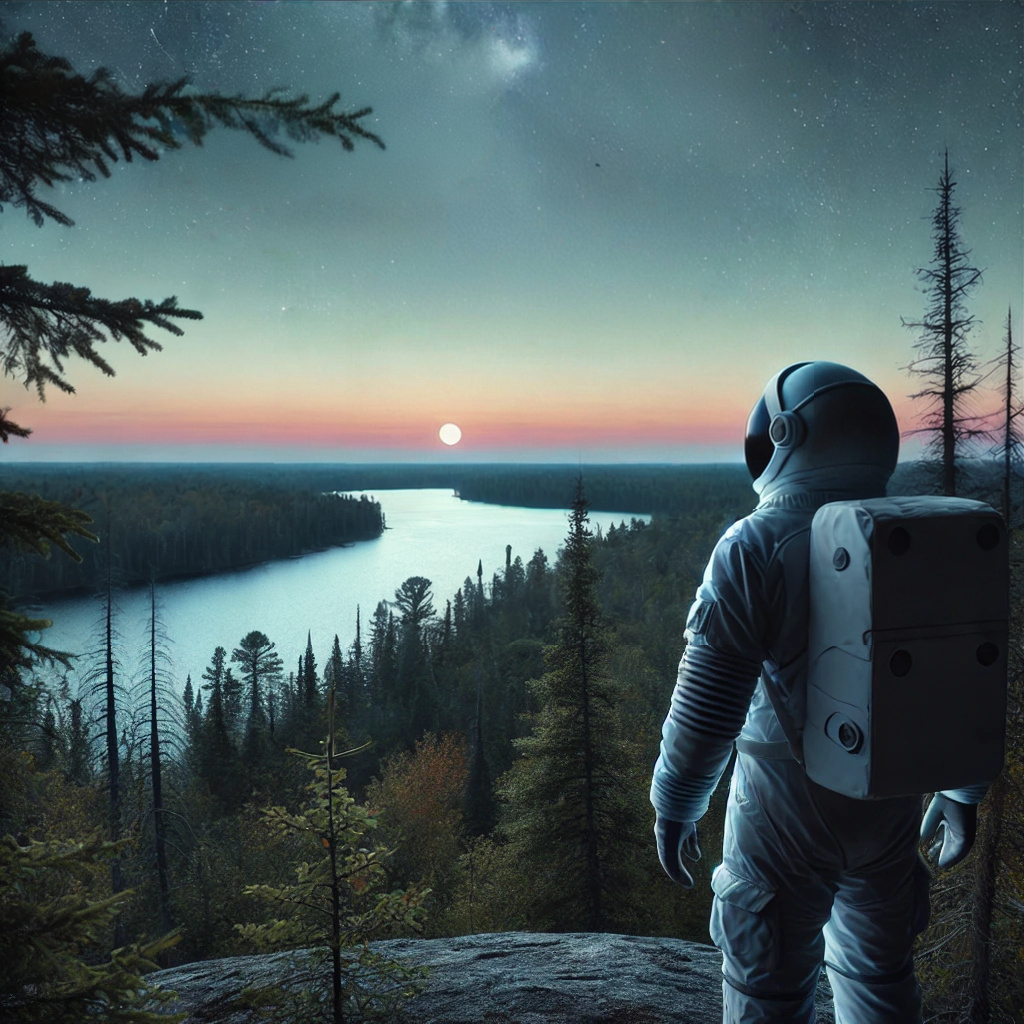
The reasons why I call myself an Astronaut On Earth, it turns out, have been growing as I have been learning more about astronauts, space, neuroscience, kinesiology, and continuing my rehabilitation from my Spinal Cord Injury. I want to take some time to help others understand why I’ve called myself this, and hopefully this will also help raise awareness to the details and intricacies of life now that I’m healing from a spinal cord injury.
Bone Mass Density

Osteopenia is reduced bone density that can become osteoporosis if it’s not treated.
Decreases in Bone Mass Density (BMD) is something both Astronauts and myself alike have to be cautious of and continually working to prevent. Because I’m not able to constantly be weight bearing, aka walking, my bones (as well as everyone’s) will slowly start to degrade, and loose mass. Turns out our musculoskeletal system is very much a ‘use it or loose it’ type of system. If we don’t constantly load our bones and muscles, our brain will instinctively withdraw resources from those areas that are lacking use. Turns out I’m already in the ‘Osteopenia’ category, so I’m working on being in the standing frame for longer sessions more and more now throughout the day! “It might not seem like it, but they’re constantly growing, changing and reshaping themselves throughout your life.” Turns out also, Astronauts wear a type of compression gear, to help prevent and ward off Osteopenia or decrease in bone density. “One of the suits, the Gravity Loading Countermeasure Skinsuit (GLCS), has already undergone testing on the International Space Station twice. It simulates gravity loading – tricking the body into believing it is standing on Earth, and therefore provoking it to maintain its bone density.” [4] This has been something I have been experimenting with, compression gear, as well as interested in helping expand upon for folks on Earth to ward off injuries and related issues due to decreases in bone density and muscle loss.
The Facilities
Toilet Routine (#1 & #2). This might not be something you would expect, but it turns out astronauts as well as myself are both victims to changes in how we have to use the facilities. I’d rather not divulge discreetly how I have to utilize the facilities, but the astronauts have, admittedly, a much more interesting time, I would say. “To get around the problems of zero-gravity bathroom breaks, the new toilet is a specially designed vacuum toilet. There are two parts: a hose with a funnel at the end for peeing and a small raised toilet seat for pooping. The bathroom is full of handholds and footholds so that astronauts don’t drift off in the middle of their business. To pee, they can sit or stand and then hold the funnel and hose tightly against their skin so that nothing leaks out. To poop, astronauts lift the toilet lid and sit on the seat — just like here on Earth. But this toilet starts suctioning as soon as the lid is lifted to prevent things from drifting away — and to control the stink. To make sure there’s a tight fit between the toilet seat and the astronauts’ behinds, the toilet seat is smaller than the one in your house.” [1] Just another one of the great joys of having to navigate life currently in my situation. I am constantly exploring alternative solutions through my Urologists and Pelvic Floor Physical Therapists for improving my situation (straight cath + dig stim). This has been an area of constant focus and I have been noticing changes due to the exercises and devices I have been using! Slow but steady work!
Exercise Routine & Equipment
Strength training turns out ties in with the first item I listed, Bone Mass Density, but I broke it out as its own individual item because our muscles, nerves, tendons, and the rest of our musculoskeletal system are also susceptible to the lack of gravity as well! The idea in Neuroplasticity, the principle ‘Use it or Lose it’ explains how neural circuits and muscles that are not actively engaged in performing tasks for an extended period of time begin to degrade. Quite literally, this means if we do not use an area of our brain for a prolonged time, we will lose the function that was previously stored there. For example, “if an individual were to have a stroke on the right side of their brain, they may lose some function in their left arm. If because it is more difficult to complete tasks with their left arm, they simply use their right arm for all tasks to compensate, their brain will reorganize so that less space is dedicated to the function of the left arm thus limiting potential for recovery.” [3] This is exactly what I am combating on a daily basis with my exercises, micro-movements, PT, OT, Pilates, standing frame and floor work! Figuring out how to constantly be loading parts of my body that aren’t being used as regularly, and maintain that space in my brain is something I have to keep up with on a daily basis! Turns out also, astronauts need to exercise for 2+ hrs each day. I would say that is extremely close to how many hours each day I am setting aside for all of the items I described above, but usually more than just 2hrs. ARED is one of the devices that Astronauts use while in space to help mimic typical strength training equipment.
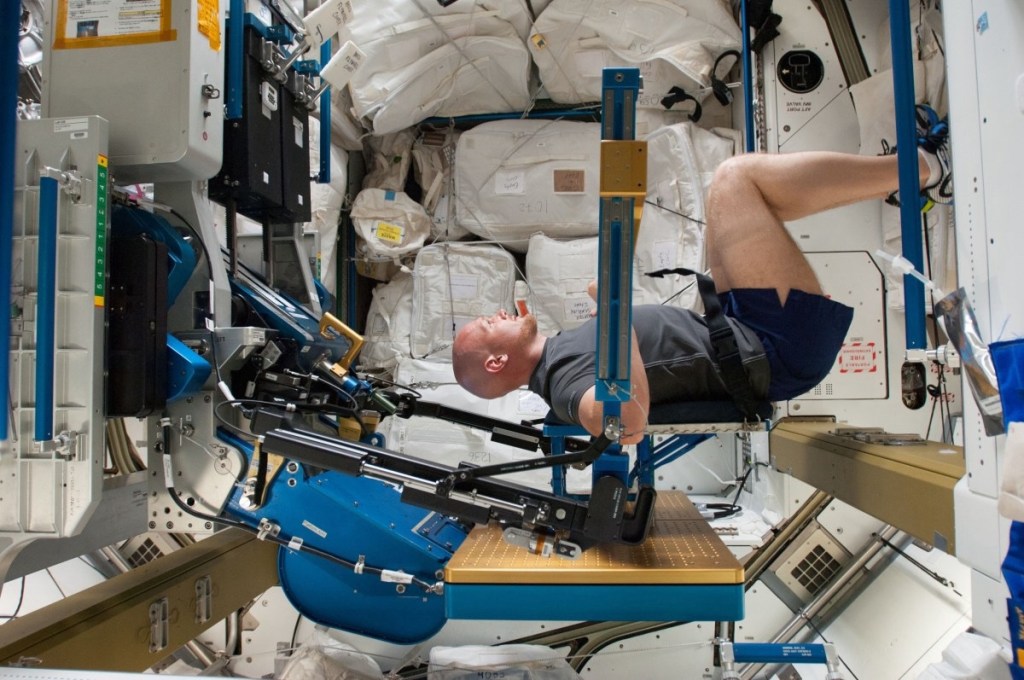
NASA [5]
I also use various equipment to help me complete gait training, as well as standing exercises. The Treadmill + Zero G Harness is the first device I’m listing specifically and is shown below.

The Treadmill plus Zero Gravity harness helps offload a portion of my body weight, to help allow me the opportunity to move my legs without having to also support my entire body weight as well. The harness can increase and decrease the load assistance, based on each individuals needs.
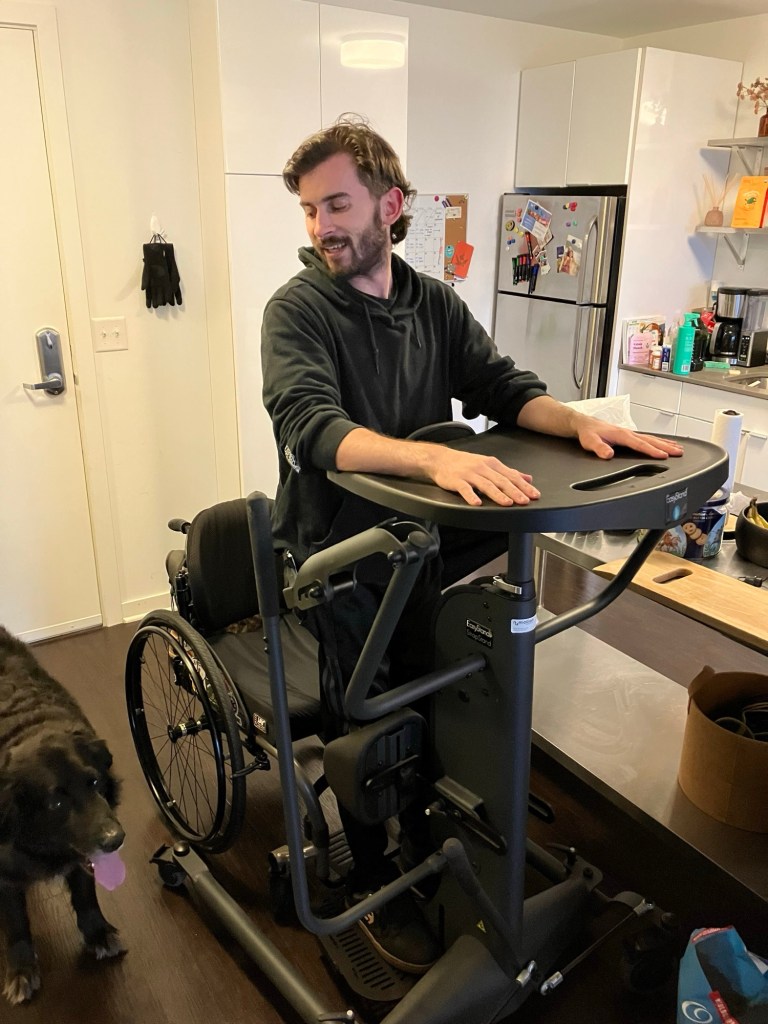
The next device I wanted to highlight is the Standing Frame. This has been a staple in my recovery journey now at home and at work. This allows me to get up into a standing position, load my bones and joints, and also work the muscles needed for weight bearing. I am currently working on being in the standing frame for 1hr 40min+ now, in addition to my work out and exercise daily routines.

Hip support and knee support to help get both my hip and knees in extension
From here, I highlight a few of the devices I have grown to really enjoy using at Pilates! Turns out Joseph Pilates developed his devices during WWI to help rehabilitate bed ridden patients! So he made these devices to allow for light loads —> increasing difficulty. You can see below in some of the videos how my legs are actually able to do some unassisted work, just me and the devices!
Pilates has been an excellent source of exercise for me these days, and I am excited to see where it will continue to take me!
Rarity of Occurrence
One additional aspect that has stayed with me during this experience, is how rare of a situation I currently am in. I added some tables and charts to help convey the information, because it’s rather interesting when you put it on paper. I understand that folks with SCI’s are much more common than astronauts. I am lucky enough to be in a situation where I can continue to progress, work, and help my body every day. Because I’m able to do that, it puts me in a category that is now seemingly closer, smaller, and few. Unfortunately not everyone who has had a spinal cord injury is able to get back walking. Not only that, but many are not able to maintain as rigorous of an exercise routine, and are not able to maintain their physical fitness to a degree that I have been fortunate enough to do. All of us are lucky in some aspects, and fortunate in other ways. I’m fortunate enough to be able to continue my rehab journey, and for that, I am thankful.
If you look below, you can see how the numbers start to dwindle, as we move from the entire population in the US, to then the folks like me continuing to progress, and then the small and select Astronaut category.

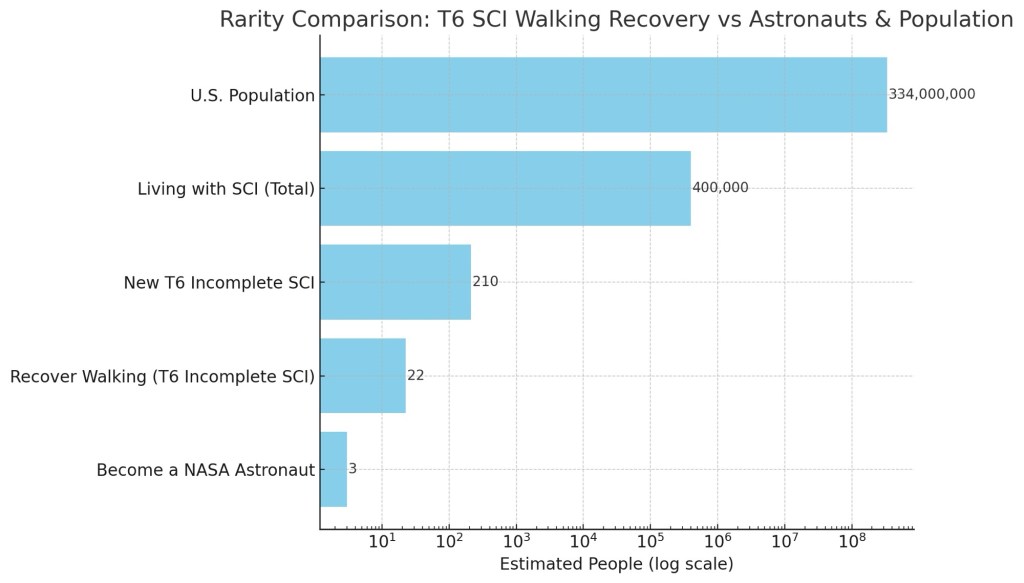
So, it’s honestly kinda sad, difficult, but also really wild how few folks are also able to regain independent walking, which ties into the rarity comparison:
📊 Population-Level Rarity
Annual New Incomplete T6 SCIs (U.S. estimate)
• ~1,500–2,000 new thoracic SCIs/year (across all levels)
• Let’s estimate ~300–400 are T6 (mid-thoracic)
• Roughly 60% are incomplete = ~180–240 people/year
• Of those, 5–15% walk independently
→ 9–36 people per year in the U.S.
🧠 So only 9 to 36 people in the entire U.S. per year regain independent walking from a T6 incomplete SCI.
These numbers are tiny, and hopefully one day we can help figure out how to regain this ability for more. Right now it would appear to take a lot of work, and alot of time and patience.
Movement/ Locomotion
For the next item of comparison, being in space, particularly a space shuttle, or the ISS, requires an astronaut to move about their surroundings in an alternative way. Without Gravity, they have to use their arms and legs together to “float” and traverse through the station. I’m currently in a wheelchair for now, and have to enter society and participate in such. It’s less than ideal, but it gets me out of the house, work, PT, and around town for the moment.
Sleep
Sleep! This has been a constant source of work! “Sleeping can be a problem when you are weightless. Astronauts must strap themselves down when they sleeper to avoid bumping into things. Station and shuttle crews have a sleeping bags that can be attached to a seat or wall. On the shuttle, there are 4 sleep sacks. Other crew members can sleep in the commanders seat or pilots seat or can attach themselves to the wall.” [6]

For me, sleep has been a very difficult endeavor since waking up in the hospital. There have been many restless nights, where I may have only gotten 2-3hrs for an extended period of time. I remember when I stopped taking the pain killers, nerve pain, and nerve blocker medications, I had about a month where I could not get to sleep because of all these compounding factors. I would just lay there, with my eyes closed, and do something similar to meditating. I would just not open my eyes, or try my best to not allow myself to move, or stay still as best I could. I tried to recreate “sleeping” as best that I could. Turns out it kinda worked, because there were many days my Garmin watch would register only 1-3hrs of sleep, but somehow I still felt fairly well rested? This was really interesting to me, and has made me question the idea of sleep, rest, and recovery. Also too, my frequent trips to the bathroom have required me to take on a modified biphasic sleep schedule, where at some point in the wee hours of the morning, I have to get up to use the bathroom. The job of getting myself into and out of bed is no small chore, wrangling my half-awake/ half-responsive legs, that are also tight, sweaty, and wanting to go for a run, is also a job. This process has gotten slightly faster, but the stronger my legs get, the better they have been at helping me get out of the bed!
Nutrition/Digestion
So, for nutrition/digestion, this too has been an interesting sequence of events. This all started with needing to drink Metamucil more than I would have liked. But now has transformed into a situation where I have actually learned about proper nutrition, hydration, and meal planning. Callie and I have gotten into an excellent routine, where we are eating primarily whole foods, with some fun exceptions when we need them. I eat an apple every day, plus additional fruits throughout. Every dinner is paired with a salad, and now I do try to target to get 30+ grams of fiber throughout the day. This is sometimes difficult, but it has greatly increased the motility of my GI tract, and has helped keep me extremely regular!
“Digestion and absorption are disturbed due to microgravity primarily because the absence of gravity alters the normal functioning of the gastrointestinal system. In microgravity, the absence of gravitational forces significantly impacts the motility of the gastrointestinal tract.” [7] from NIH, I can see too, that GI motility is also a concern for astronauts. Peristalsis is a function I can feel slowly waking up and returning in my GI tract! One day at a time, my body is working better and better!
Continued Education
While continuing to explore some similarities between my situation and an astronaut’s, let’s talk about training and education! An Astronaut usually has a 4yr+ degree in a STEM related field (like me, in Mechanical Engineering). They then go on to acquire a significant amount of flight hours (1000hrs+) as a pilot. Unfortunately, I have not gone to flight school (yet!), but I have been expanding upon my Neuroscience, Physical Therapy, Kinesiology knowledge quickly during these past two years. My Physical Therapist had said one day, “Joe, you’re on your way to earning an honorary Physical Therapy degree!” I think that may be a stretch! As physical therapists go to school for 5+years, with over 3 semesters worth of clinicals! But! Alas, I have been going to Physical therapy 3x a week, 2hrs each session for now over 2years. While also working a full time engineering job, and maintaining my reading and writing habits to constantly expand my knowledge when it comes to my rehabilitation, and rehab goals. We never stop learning, and that has only been reinforced with some of the principles of Neuroplasticity I have been able to learn about! The saying, “You can’t teach an old dog new tricks” is a self-full filling “prophecy” if you will, because our brain’s plasticity works both ways. If you continue to nurture and foster a learning mentality, it will continue. Just look at the Nobel Prize winners in Physics over the past 25 years, and you will see the average age is well over 44yrs old. Back in 2018 the gentleman who won, Arthur Ashkin, was 96! Only when we tell ourselves we cannot learn, does that process stop. With this, I hope to continue to be a lifelong learner, as many astronauts have been before me.
Gait Training & Rehabilitation
So for this next example, this is quite astonishingly similar! When Astronauts return to earth from out in orbit, they usually have a period of time that they are required to re-learn how to walk and regain strength of their former selves!
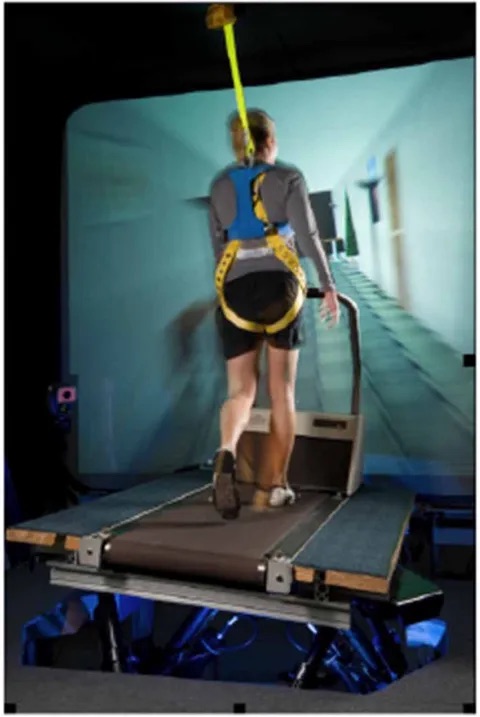
“Frank Rubio, who has spent 371 days in space, says his first two or three months back on Earth were about “reincorporating” himself back into life and “rehabilitating” his body.
“You adapt incredibly quickly to being in space, but then unfortunately, the readaptation process back to Earth can sometimes be a little bit longer and more difficult,” he told Time Magazine in 2023.
“And that’s just, I think, because the forces of gravity and the forces at play here on Earth tend to have a stronger effect on your body.” [8] This entire arduous process is albeit shorter for astronauts, they still are required to have to undergo an extensive period of time, rehabilitating their bodies. I know my process is longer, because the Central Nervous System, and our nerves in general need more time to heal than most any other bodily system in our body. So I continue, one day at a time!
Detachment
Another interesting comparison, is the time spent away from traditional society. From the time they take off, to the time they arrive, they are in an environment that is removed, detached, and isolated from their loved ones, family, friends, and additional colleagues. This is also a bit reminiscent to my time spent in the hospital, where I was limited visitors, to help maintain my body’s delicate health. From that time, and moving back in with my parents, I interacted with very few additional individuals, outside of my rehab team at physical therapy. Taking such an abrupt change from living a very social and interactive life as I was, to now being removed from my apartment, my dog, job, work, friends, was very difficult to manage mentally. I was so preoccupied with my recovery and daily living, that I didn’t have time to realize any of this, it was all so abrupt. But what this also did, was create an environment that I was able to slow down. I was able to take this time to observe the world around me, take it all in, and think. It became very apparent to me how quickly everyone in modern society is attempting to proceed through life, as opposed to slowing down, and taking it in. For all scenarios. It was so interesting too, because it was around this time in my rehab journey that I started to write every day, as I still do, which also helped slow down my thought processes. This is also analogous to how an astronaut keeps daily journals, mission logs, as well as any additional scientific documentation. I have been attempting to keep as best a record of my rehab events, to hopefully help others in situations not too dissimilar to myself.
Donning The Spacesuit
So this next one is also an interesting comparison, because I don’t believe I would have guessed this was the case. “It can take 30 mins to get inside a spacesuit
That’s because the ensemble is several layers of thin clothing, not one big suit an astronaut climbs into and zips up. The orange part that everyone sees as the astronauts walk out to the Astrovan on their way to the launch pad is simply the top layer.” [9] So pretty much in any configuration I have to be in, to get dressed, takes me a minimum of 10minutes. It’s not ideal. Meanwhile I know most people can get dressed in well under 30 seconds. I will have to keep telling myself, “Joe, you’re donning your spacesuit” to help me get through these difficult moments while just trying to complete basic tasks.
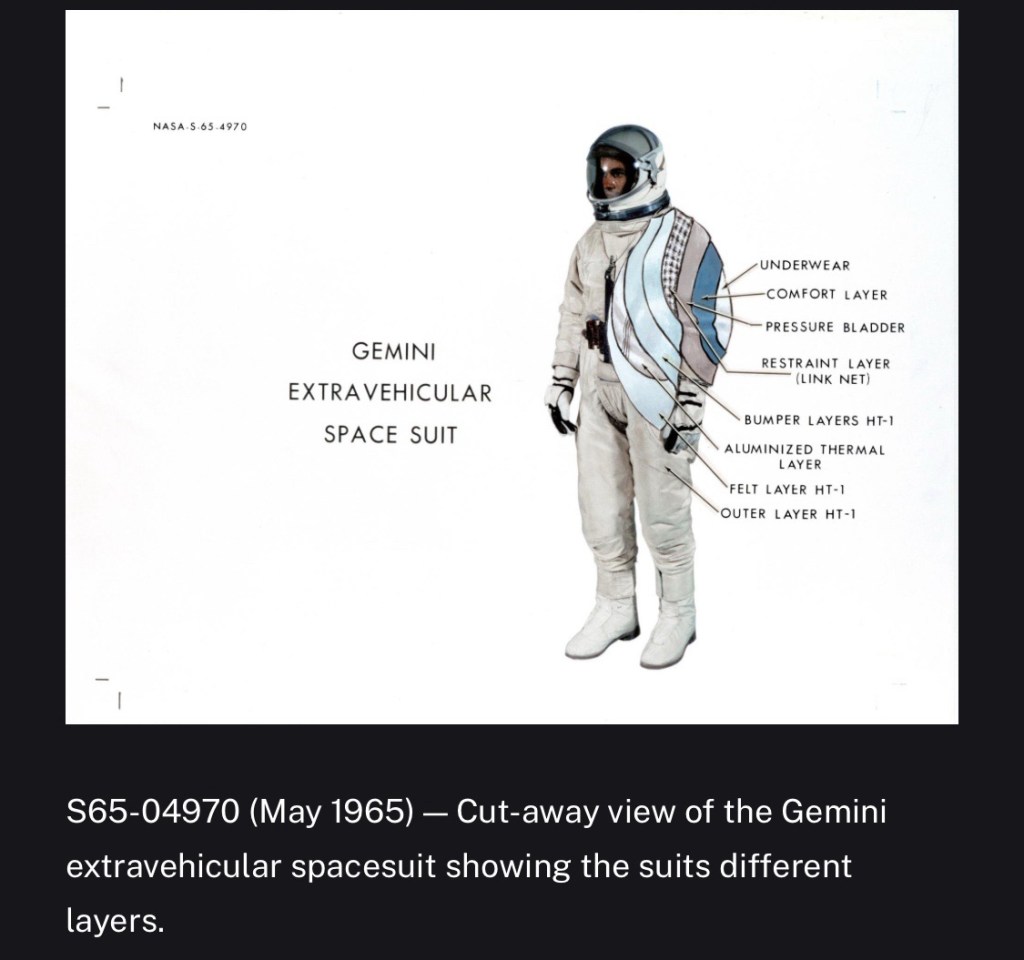

[9]
“Overview Effect”
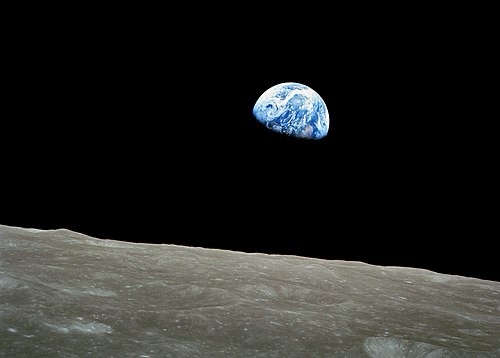
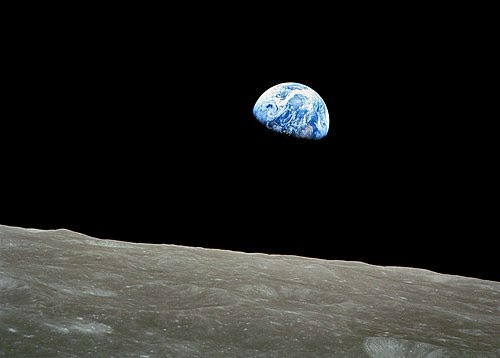
Earthrise (1968). Apollo 8 astronaut Bill Anders recalled, “When I looked up and saw the Earth coming up on this very stark, beat-up Moon horizon, I was immediately almost overcome with the thought, ‘Here we came all this way to the Moon, and yet the most significant thing we’re seeing is our own home planet, the Earth.’”[11]
So, I have experienced something from my time away from society, time spent alone, time spent thinking, ruminating, and thinking about something fairly interesting. It ties in to the idea of ‘Innerdependence’. The idea that we aren’t alone, and that we are all apart of something larger than ourselves, and also need one another. The idea I had originally thought to myself as “The Observer Effect” because this is what I would describe what I have experienced. This phenomenon of having to sit on the sidelines of life, watch it take place, and see from afar how things are going on. I never had the opportunity to see the profound beauty that astronauts describe in the “Overview Effect,” but what’s interesting is the shockingly similar set of ideas I’ve had to come to, during this whole experience as well. I feel like it could be a whole ‘nother post or book talking about this one. It’s been really something, to have to think about life for so long with the view of a hospital ceiling directly in front of my eyes. It all made me realize too, how small and seemingly insignificant we are. At the end of the day, all we really have are the folks around and near to us. It’s been a very difficult and interesting time to have to had these thoughts.
Daily Routine
One more idea to tie it all together, is how structured my days have become. I have to wake up at the same time (middle of nights is when I let my body wake itself up, from the urge to have to go) in the morning, regardless if it’s a weekday or weekend. I get started and use the facilities, and then I’m able to allow myself to start my day after the massive chore of personal hygiene is for myself. Once I get myself to work, the day progresses and before I can cut out to go home, I head off to PT. I’m there for usually 2hrs. From after PT, I help Callie make dinner, and from here, I usually only have maybe 1hr of precious “free time” before I need to get to bed to give my body enough rest to help my recovery.
This schedule isn’t too dissimilar to the structure that astronauts must also be tasked with, as each “regular” task that most folks on earth would describe as trivial becomes a rather large ordeal. “Generally, days in orbit are busy – and when heavy equipment has to be moved, they can be exhausting, too. Just because a crate of scientific gear is weightless doesn’t mean that it has lost its mass. Astronauts have to pull and push against inertia, and they are often working in strange positions for which human muscles are not well adapted.” [10] This has also been my experience in the wheelchair, or as I may more commonly refer to as ‘The chair’. By having to locomote in a non traditional way, I’ve been required to also get creative with the use of my body, while simultaneously actively engaging my core and legs almost constantly throughout the day. I do this in an effort to help rebuild the neurological connection between said muscles and brain. This massive effort definitely seems to be paying off because my muscles are more and more online throughout the day! They truly are waking up!
Zen and the Art of Motorcycle Maintenance
This next example helps round out why I call myself The Astronaut on Earth, and finishes up my list here of similarities, not that I haven’t found more, but I will save more for later. This next one actually hits pretty near and dear to home. One rather unremarkable day, during one of my last years at Michigan Tech, I was at work for the Facilities/ Grounds department. I helped the mechanic in the shop, and also when it wasn’t snowing, weed-whacked, performed lawn maintenance, took care of the garbage cans, and also took care of the Recycling for the entire campus. One part of the job that I particularly did not love, but benefited from, was the part of the day when I would do the recycling for the campus Library. I would recycle old or out of date books. It made me feel like a Nazi at times, burning or throwing away perfectly good books! But anyways, I myself had gotten in the habit of grabbing a book now and then that looked interesting, and reading it later! So I was doing my effort of trying to save a few.

The book I pulled from the recycling that day had a title on it that caught my eye, ‘Zen and the Art of Motorcycle Maintenance,’ by Robert M Pirsig. Seemed like one worth looking at? I had a motorcycle, I liked working on it, let’s see what this has to do with Zen? So, I grab the book, place it on the shelf for later. That day came years after I graduated and got my full time job. I ended up reading this book completely through, and on the inside of the back cover I found a handwritten note, “Thanks for being the best part of the mission!”, and on the other side of the page, was a list of signatures of the entire flight crew from NASA’s STS-94. I had no idea who they had given this book to, or why it ended up in the recycling bin of Michigan Tech!?? But, here I was, maybe 4 years after pulling it from the recycling, and realizing it had some very interesting origins and now it was in my hands! How incredible!

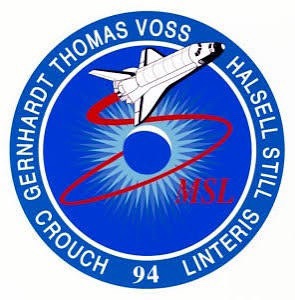
And then, to come back to it all, the fact that I’ve now been in a horrible motorcycle accident. So much for ‘Zen’ being able to be achieved on working on the bike anymore? I guess that’s not exactly the point of the book, if I remember correctly, it was more so about the idea of working with something that required care, discipline, and consistency. To not rush things, or risk causing another issue down the road. Like setting points on a motorcycle without a CDI. There are quite a few steps that are required to make sure you have the timing correct for each cylinder, as well as the spacing “gap”, the cleanliness of your contacts, and how they are aligned when they make contact themselves. One little error can cause your bike not to run, or run poorly because of the lack of proper timing. I guess that’s a lot like my body, nowadays. One little error and it can cause my body to run really poorly. Like my diet, for example. Sigh. It would be nice to be able to get to a point where my only problems are my motorcycle falling out of correct timing, but alas, here I am. So I keep plugging on, one day at a time, mending my damaged central nervous system, and helping him heal as best I can.
Summary
I really have had to think so thoroughly these days after the accident. It’s sometimes hard to put everything I am going through into words. I guess, that’s another reason I feel like an astronaut. But, this was my attempt at trying to make it understandable, to people like you. I realize that there are some really crazy things that can happen to us in the world, and some very terrible things as well. I’m trying to make sense of it all, and I hope that one day, I can complete my mission, and get back on my feet. At least I can say I didn’t give up not trying to do so. And maybe, that’s all we can do. Try, one day at a time.
Works Cited
1. Gregg, Tracy. “How Do Astronauts Pee in Space?” UBNow: News and Views for UB Faculty and Staff – University at Buffalo, 23 Mar. 2021, http://www.buffalo.edu/ubnow/stories/2021/03/gregg-conversation-bathroom-space.html#:~:text=To%20get%20around%20the%20problems,is%20more%20than%2090%25%20water.
2. Clinic, Cleveland. “What’s the Difference between Osteopenia vs. Osteoporosis?” Cleveland Clinic, 24 June 2025, my.clevelandclinic.org/health/diseases/21855-osteopenia.
3. Agrimis, Jessie. “Principles of Neuroplasticity: Use It or Lose It.” NeuroLab 360, NeuroLab 360, 2 Dec. 2021, http://www.neurolab360.com/blog/principles-of-neuroplasticity-use-it-or-lose-it.
4. “Astronaut Compression Skinsuits.” Astronaut Compression Skinsuits | Australian Space Agency, http://www.space.gov.au/spacesuits-preserving-human-health. Accessed 27 July 2025.
5. “Counteracting Bone and Muscle Loss in Microgravity.” NASA, NASA, 21 Mar. 2024, http://www.nasa.gov/missions/station/iss-research/counteracting-bone-and-muscle-loss-in-microgravity/#:~:text=Each%20astronaut%20aboard%20the%20space,add%20some%20gravity%2Dlike%20force.
6. NASA, http://www.nasa.gov/wp-content/uploads/2015/05/167746main_fs_livingandworkinginspace508c.pdf?emrc=b2bbdd. Accessed 27 July 2025.
7. Dakkumadugula, Angel, et al. “Space Nutrition and the Biochemical Changes Caused in Astronauts Health Due to Space Flight: A Review.” Food Chemistry: X, U.S. National Library of Medicine, 15 Sept. 2023, pmc.ncbi.nlm.nih.gov/articles/PMC10740090/#:~:text=Digestion%20and%20absorption%20are%20disturbed,motility%20of%20the%20gastrointestinal%20trac
8. Hewson, Georgie. “What Does Nine Months in Space Do to the Human Body?” ABC News, ABC News, 19 Mar. 2025, http://www.abc.net.au/news/2025-03-19/what-does-nine-months-in-space-do-to-the-body-/105065612.
9. “Spacesuits Built to Handle Pressure.” NASA, NASA, 15 Mar. 2023, http://www.nasa.gov/humans-in-space/spacesuits-built-to-handle-pressure
10. “Daily Life.” ESA, http://www.esa.int/Science_Exploration/Human_and_Robotic_Exploration/Astronauts/Daily_life. Accessed 27 July 2025.
11. Yoder, Kate. “How the View from Space Might Be Key to Saving the Planet.” Grist, 9 Feb. 2022, grist.org/climate/overview-effect-view-of-earth-from-space-astronauts-climate-change/.
12. Bloomberg, Jacob, et al. “Enhancing Astronaut Performance Using Sensorimotor Adaptability Training.” Frontiers, Frontiers, 28 July 2025, http://www.frontiersin.org/journals/systems-neuroscience/articles/10.3389/fnsys.2015.00129/full.
 The Astronaut on Earth
Leave a comment